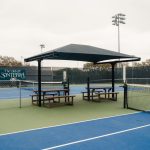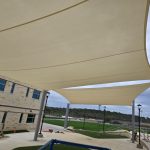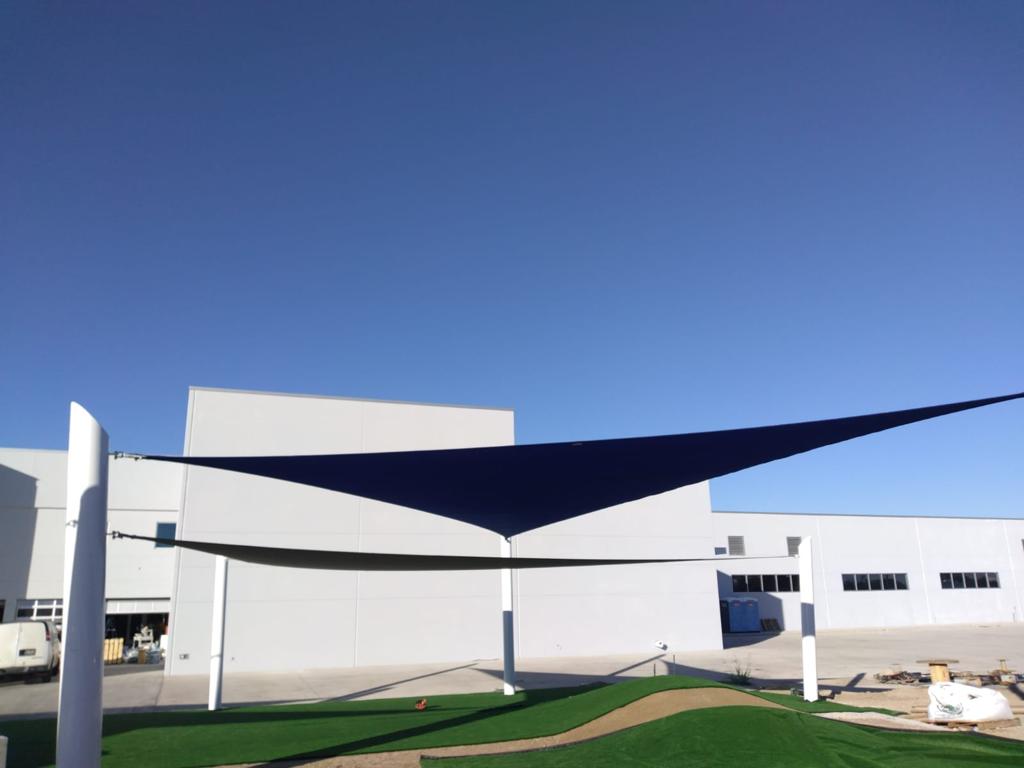


Environmentally Friendly Shade Structures and Cost-Effective Fabric Architecture
One of the strengths of fabric architecture is that structural performance, environmental value, and cost efficiency can work together rather than compete. Tensoshade™ presents its shade structures and shade sail materials as 100% recyclable, and highlights product benefits such as UV protection, lower ambient air temperature, and cost-effective weather coverage. That combination helps explain why structural shade systems can be attractive across a wide range of project types.
Environmental Value in Shade Design:
Shade structures that require no energy consumption for operation can be an appealing choice for properties seeking a more efficient site solution. Tensoshade™ specifically describes its structures and shade sail materials as recyclable and environmentally friendly, which supports the idea that a permanent tensile installation can improve a space while aligning with more sustainability-conscious design priorities.
UV Protection and Site Performance:
The product language on the Tensoshade site also emphasizes UV protection, noting that its premium-grade textiles block a high percentage of UV-related damage. That matters not only for people using the space, but for the long-term usability of the area beneath the structure. A shade cover that reduces heat and exposure can help make entryways, patios, walkways, and gathering zones more functional during hot conditions.
Cost-Effective Coverage:
Cost effectiveness in fabric architecture is not only about initial price. It is also about how much performance can be delivered through a lighter structural approach. Tensoshade™ describes its systems as cost-effective and capable of providing durable weather protection while enhancing a property visually. A well-planned outdoor shade canopy can therefore support both comfort and budget-conscious site improvement.
Why Structure Still Matters:
Even when environmental and economic benefits are part of the appeal, structural performance remains the foundation of the project. A shade structure only works as intended when membrane tension, support geometry, and anchoring are handled correctly. The environmental and cost advantages of the system depend on sound engineering rather than replacing it.
Application Across Project Types:
These benefits can apply across many property conditions, from access areas and courtyards to patios and gathering spaces. The same principles that support comfort and long-term durability also support more efficient use of the site.
Conclusion:
Environmentally friendly shade structures are most effective when they combine recyclable materials, UV protection, cost-effective coverage, and disciplined structural design. That balance is what makes fabric architecture a strong long-term solution rather than a short-term shade alternative.