

Shade Awnings and Fabric Canopy Systems for Commercial Exteriors
Commercial exteriors often rely on shade systems that must do more than provide shelter. They need to define the building edge, improve comfort at access points, and reinforce the architecture of the property as a whole. At Tensoshade™, shade awnings and fabric canopy systems are developed as engineered tensile solutions that support long-term performance while contributing to the visual identity of the site. In commercial work, that combination of structural reliability and architectural clarity is essential.
The Role of Shade at the Building Edge:
The exterior edge of a commercial building is where visitors, tenants, and staff interact with the structure most directly. Drop-off zones, entry points, outdoor waiting areas, and façade-adjacent circulation paths all benefit from properly planned coverage. A shade awning can help frame these spaces and improve comfort without introducing the visual heaviness of more enclosed overhead construction. When approached as a structural shade solution, the system becomes part of the building language rather than a separate add-on.
Fabric Canopy as a Structural Element:
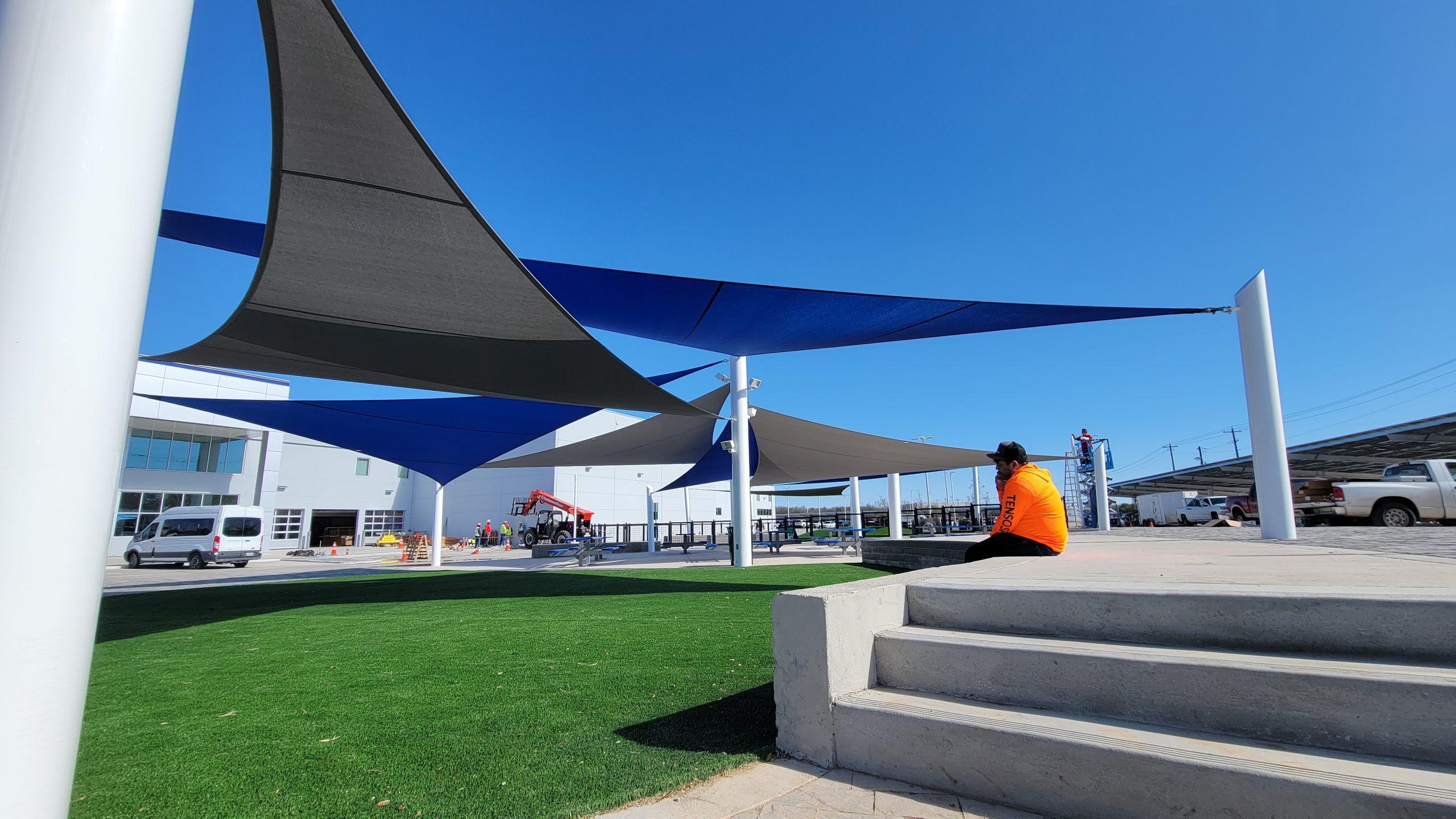
A fabric canopy is not just a visual layer stretched over steel. It relies on membrane geometry, support spacing, and load distribution to perform over time. Tensoshade™ develops these systems with careful attention to anchoring strategy, curvature, and environmental exposure so the finished structure remains stable, visually consistent, and aligned with the needs of the site. This is especially important on commercial properties where performance expectations are high and the installation is part of the public-facing environment.
Linking Shade to Site Function:
Commercial exterior systems often need to support more than one use. A canopy may define an arrival sequence, protect a queue line, connect interior and exterior circulation, or strengthen a covered transitional zone. In those settings, an outdoor shade canopy can also function as a broader structure for shade that supports how people move and gather around the property. The more integrated the system is with the site plan, the stronger the result.
Material and Exposure Considerations:
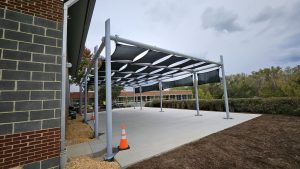
Commercial applications often face prolonged sun exposure and constant daily use. Shade fabric, fabric canopy components, and related tensioned materials therefore need to be selected for durability, UV performance, and compatibility with the support structure. Material decisions are made to preserve both structural reliability and long-term appearance.
Coordination with Other Shade Elements:
Depending on the site, shade awnings may also work alongside a larger shade cover strategy, integrating with adjacent canopy forms or broader shade systems across the property. This allows the exterior program to remain cohesive even when multiple covered zones are needed.
Conclusion:
Shade awnings and fabric canopy systems perform best when they are treated as engineered architectural elements. On commercial exteriors, they can strengthen circulation, protect key access points, and support the identity of the building while delivering the structural performance expected from a permanent tensile installation.